
Warehouse Storage Solutions for Growing E-Commerce
Last Updated: 7 November 2026
Quick Summary
Warehouse storage is the physical and organisational infrastructure that holds your stock between receiving and dispatch, and it works best when matched to your order profile, SKU count and growth rate rather than simply renting more space. Most growing e-commerce operations combine two or three systems, such as pallet racking, adjustable shelving and bin storage, with a named location for every SKU.
- Pallet racking suits palletised bulk stock but needs clear aisle planning and forklift access.
- Adjustable beam levels let you change shelf heights as product sizes shift season to season.
- Shelving and bin storage suit small, high-count SKUs where a defined home keeps counts accurate.
- Mixing pallet and small-part storage without a location scheme is where stock accuracy drifts.
- Costing only rent and racking understates growth costs, as labour and returns handling rise faster.
Table of Contents
- Matching Warehouse Storage to Your Order Volume
- Comparing Warehouse Storage Systems and Racking Options
- Warehouse Inventory Management That Keeps Stock Accurate
- E-Commerce Stock Control for SKU Growth and Seasonality
- E-Commerce Fulfilment Services: Picking, Packing and Dispatch
- Planning Storage Capacity and Cost as You Scale
- Choosing a Warehousing Partner for the Next Stage
- Frequently Asked Questions
Matching Warehouse Storage to Your Order Volume
Warehouse storage is the physical and organisational infrastructure that holds your stock between receiving and dispatch. Getting it right means matching the storage method to your order profile, SKU count and growth rate, not simply renting more space. Growing e-commerce brands often run into trouble when storage decisions are made reactively, one pallet at a time.
The pattern is familiar. A brand outgrows a spare room, moves into a small unit, fills it within a season, then bolts on shelving and floor space with no overall plan. Costs creep up, picking slows down and stock accuracy drifts. The fix is to choose a storage model that matches your current volume and has a clear path to the next stage.
Below, the main warehouse storage solutions for growing e-commerce are compared, with an explanation of how to keep stock accurate as SKU counts rise and a practical way to plan capacity and cost as you scale.
Comparing Warehouse Storage Systems and Racking Options
The main warehouse storage systems are pallet racking, adjustable shelving, mezzanine floors, bin or tote storage and, for small items, shelving with dividers. Each suits a different mix of palletised goods, small parts and pick frequency, and most growing operations end up combining two or three rather than standardising on one.
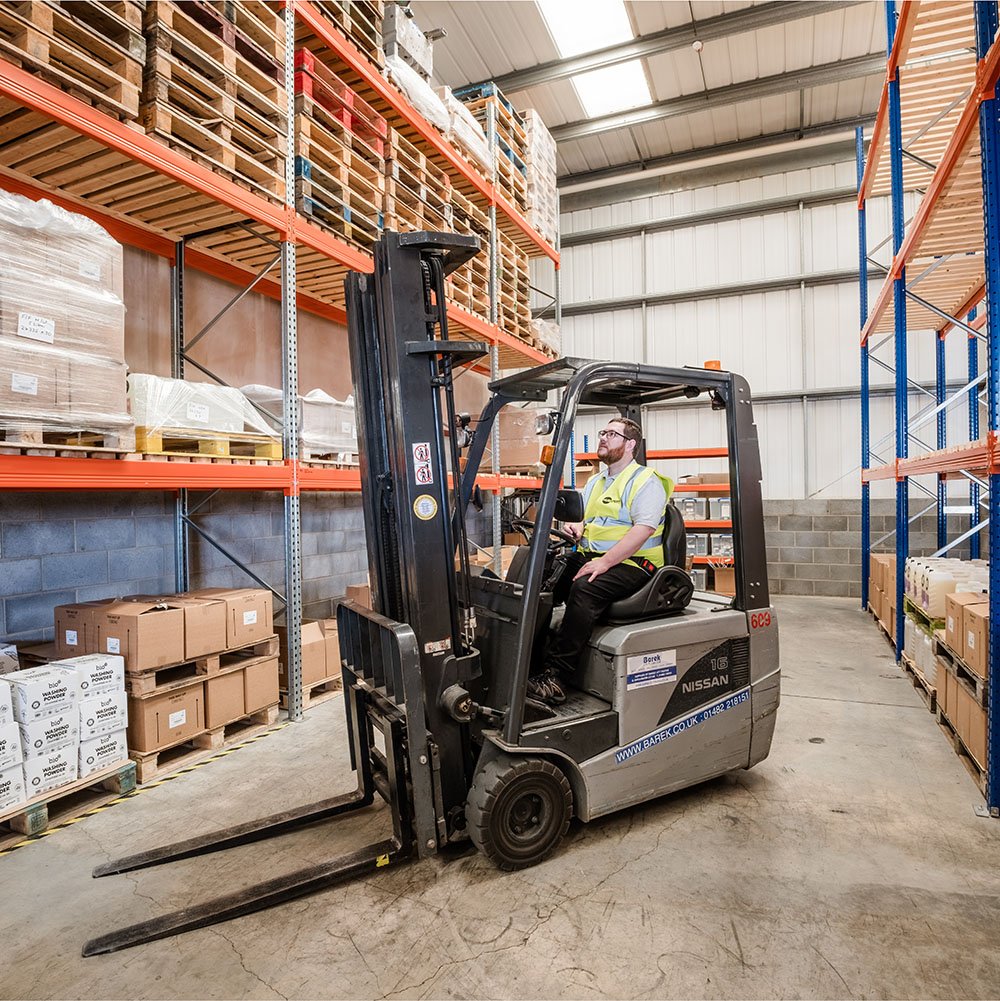
Pallet racking holds palletised goods on beams at height and is the backbone of most professional warehouses. Adjustable beam levels let you change the height between shelves as product sizes change, which matters when your range shifts season to season. Shelving and bin storage suit small, high-count SKUs such as components, accessories or spare parts, where a defined home for each line keeps counts accurate.
| Storage system | Best for | Operational trade-off |
|---|---|---|
| Pallet racking | Palletised goods, bulk stock | Needs clear aisle planning and forklift access |
| Adjustable racking | Changing product sizes | Regular reconfiguration and re-labelling |
| Shelving and bins | Small, high-count SKUs | Slower picking if locations are poorly labelled |
| Mezzanine | Extra space without moving | Load limits, access and fire planning |
| Tote and bin storage | Mixed small parts | Needs a location discipline to stay accurate |
Space optimisation comes from using vertical space well, keeping aisles clear and grouping fast-moving lines near dispatch. A common mistake is buying racking before mapping the pick path. In practice, layout should follow order flow, not the other way round: decide the sequence from goods-in to put-away to pick to pack, then choose the storage that fits that sequence.
The decision criteria that matter most are unit load (pallet, tote or each), pick frequency, SKU count and how often the range changes. High-frequency, small-item lines usually justify shelving or bin locations close to packing; slow-moving palletised stock can sit further back and higher up. Where the range changes often, adjustable racking and clearly labelled bin locations cost less over time than fixed shelving that has to be rebuilt.
Watch out: mixing pallet and small-part storage in the same aisle without a clear location scheme is where stock accuracy starts to drift, because pickers default to the nearest shelf rather than the recorded location. A named location for every SKU, recorded on put-away, is what keeps a mixed layout workable as volumes rise. This is the point where a managed setup earns its keep: the storage mix, labelling and location discipline are designed together rather than bolted on one pallet at a time.
Warehouse Inventory Management That Keeps Stock Accurate
Warehouse inventory management is the set of processes that keeps recorded stock aligned with physical stock. Accuracy comes from disciplined goods-in, put-away, picking and returns routines, supported by a warehouse management system that updates in real time.
Real-time visibility is the difference between a stock figure you trust and one you reconcile by hand each month. Storage location discipline matters just as much: every SKU needs a defined home, and every move needs recording.
Stock rotation keeps older stock moving first, which protects shelf life and reduces write-offs. Cycle counting a small portion of locations regularly catches drift before it becomes a full stocktake problem. Inventory management is where these routines live day to day, and it is the area where most in-house operations quietly lose control as SKU counts climb.
E-Commerce Stock Control for SKU Growth and Seasonality
E-commerce stock control is the practice of tracking stock levels, locations and movements across a growing product range so that availability, accuracy and cost stay under control. It becomes harder with every new SKU and every seasonal peak.
As ranges grow, storage decisions that worked at fifty SKUs fail at five hundred. A single stock picture across sales channels helps avoid overselling on one platform while stock sits idle on another.
Seasonality is the real test. Peak stock arrives before you need it and clears afterwards, so flexible storage and a clear capacity plan matter more than a long lease. Our guide to flexible warehousing for seasonal growth sets out how to plan peak capacity and structure arrangements that scale without long-term lock-in.
E-Commerce Fulfilment Services: Picking, Packing and Dispatch
E-commerce fulfilment services cover the picking, packing and dispatch of online orders, including returns handling and carrier management. The aim is simple: the right item, packed properly, dispatched on time, every time.
Picking accuracy and delivery speed drive customer satisfaction directly. Manual picking without scanning invites errors, and errors cost more than the labour they save once returns and replacements are counted. Packing needs to protect the product in transit without wasting materials, and dispatch needs a clear cut-off routine so orders leave when promised.
Returns and reverse logistics deserve planning, not improvisation. A defined process for receiving returns, inspecting them, returning sellable stock to its location and recording the outcome keeps stock accurate and protects margin. Order processing and picking is the operational heart of any fulfilment setup, and it is where outsourcing usually pays back fastest.
Planning Storage Capacity and Cost as You Scale
Storage capacity planning means forecasting the space, racking and labour your order volume will need over the next twelve to twenty-four months, then choosing a storage model that flexes with it. The commercial case rests on total cost, not headline rent, and the method below is one most growing operations can apply without specialist software.
Build your plan around four inputs: average and peak order volume, SKU count and growth, pallet and shelf space per SKU, and the labour hours each picking method needs. Storage costs and labour costs tend to move together. More space with poor layout can raise both, while better layout and vertical use can absorb growth without a move.
A practical framework runs in four steps. First, convert your peak week into a space figure by multiplying peak pallets and shelf locations by the space each needs, then add a working allowance for aisles and packing. Second, estimate labour by multiplying peak orders by the minutes per pick and pack for your current method, and compare that with a slotting or scanning change. Third, add the non-rent costs that scale with volume: packaging, carrier charges, returns handling and the management time spent reconciling stock. Fourth, test the plan against a slow month as well as a peak, because a model that only works at peak usually means paying for space you cannot fill for most of the year.
The right model depends on your stage. Early-stage sellers with steady, low volume are often better served by fixed racking in their own unit, where control matters more than flexibility. Scaling sellers with seasonal swings may find flexible third-party warehousing avoids paying for peak space all year. High-volume sellers with fast-rising SKU counts often find accuracy and pick speed, rather than floor space, become the constraint.
A simple framework helps. If your volume is steady and your range is stable, fixed racking in your own unit works. If volume swings with seasons, flexible third-party warehousing avoids paying for peak space all year. If SKU count is rising fast, invest in systems and slotting before floor space. Warehousing and storage shows how a managed setup can provide that capacity without a long lease.
Watch out: costing only the rent and the racking understates the real cost of growth, because labour, returns handling and management time often rise faster than space. A plan that compares total cost across the three models, at both peak and slow months, is the one that holds up to scrutiny.
Choosing a Warehousing Partner for the Next Stage
Choosing a warehousing partner comes down to fit: whether their storage, systems and routines match your product mix, order profile and growth plans. Proven capability with your kind of inventory matters more than a broad service list.
Ask specific questions. How will they store palletised goods versus small parts? What does their goods-in and returns process look like? How is stock accuracy measured and reported? Can they scale storage for peak without renegotiating everything? A partner who answers in operational detail is a partner who has done the work before.
A common mistake is choosing on price per pallet alone. Poor stock accuracy, slow dispatch and unresolved returns cost more than the difference in storage rates. Look for clear accountability, real-time visibility and a named contact who knows your account.
If you are weighing up your next stage, get in touch to talk through your volumes and requirements.
Your storage model should follow your order profile, not the other way round. If peak stock is straining your current setup and a permanent expansion is hard to justify, HubXpert can help with flexible warehousing, accurate inventory management and structured order processing. Get started with HubXpert and build a storage and fulfilment setup that scales with your growth.
Frequently Asked Questions
What warehouse storage is best for a growing e-commerce business?
There is no single answer, because the right choice depends on your order profile. Businesses with a narrow range and steady volume often do well with adjustable pallet racking and a defined pick face. Brands with thousands of small SKUs usually need shelving or bin locations alongside palletised goods. The deciding factors are how often each line is picked, how much vertical space you can use, and whether you need scalable storage you can expand without moving premises.
How can an e-commerce business make better use of warehouse space?
Start with the layout rather than the racking. Group fast-moving lines close to the packing bench, put slow movers higher or further back, and use vertical space where the building allows. Review storage locations against picking frequency every few months, because demand shifts. A simple slotting review often frees more capacity than buying additional racking, and it costs far less.
When should an online retailer move from self-storage to a warehouse?
The trigger is usually operational rather than a fixed order count. Signs include running out of pickable space at peak, manual stock checks that no longer reconcile, and dispatch delays caused by searching for stock. If you are holding stock in self-storage and moving it to a packing unit each week, the double handling is costing you time and accuracy. At that point, a professional warehouse with defined locations and stock control may be worth considering.
How do you improve stock accuracy in an e-commerce warehouse?
Accuracy comes from controlled locations and disciplined transactions. Give every SKU a fixed or clearly managed storage location, record every movement as it happens, and separate returns from sellable stock until they are checked. Cycle counting, where you count a small number of lines regularly rather than everything once a year, catches drift early. Real-time visibility through a warehouse management system removes the guesswork and makes discrepancies traceable to a specific transaction.
